Connecting Product Data to Revenue With AI Automation
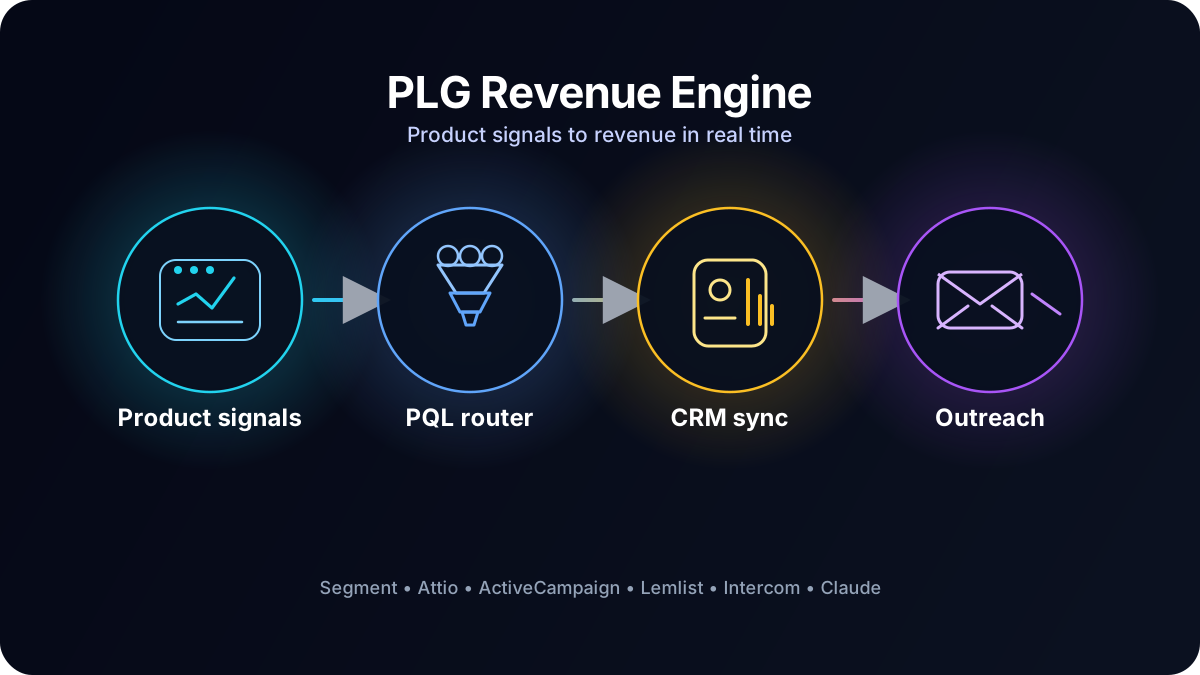
We built a four-flow n8n automation system that turns product behavior into sales actions in real time for a B2B SaaS client running a product-led growth motion.
4
coordinated flows
one coordinated revenue layer
65%
free trial to PQL lift
source-reported outcome
<10 min
signal to outreach
from product event to action
70-80%
RevOps overhead reduction
manual work removed
Background
A product-led business needed a faster path from user behavior to revenue action
The client was growing with free trials and self-serve onboarding, but the teams responsible for sales, marketing, and customer success could not see the same signals at the same time.
A user could visit the pricing page, invite a teammate, or trigger a high-intent event, and the revenue team might not know for hours. By the time a rep reached out, the moment had already cooled.
The goal was to connect product data directly to sales actions so the business could respond while the signal was still hot.
The Challenge
The revenue stack held the right data, but the systems never acted together
Segment, Attio, ActiveCampaign, Lemlist, and Intercom each held part of the story, yet none of them were orchestrated around real-time revenue decisions.
A user could visit pricing, invite a teammate, or trigger a high-intent event and the sales side might not know until much later.
Segment, Attio, ActiveCampaign, Lemlist, and Intercom all held different pieces of the customer story, but none of them acted in concert.
PQL identification, churn monitoring, and daily trial scoring were either delayed or inconsistent, which meant the best moments were easy to miss.
High-value buying intent and churn risk were sitting inside Intercom threads that no one had time to process in real time.
The core question was simple: how do you make every signal available to the revenue team before the opportunity window closes?
Walkthrough
Watch Product Signals Become Revenue Moves
This walkthrough shows the four-flow engine turning product events, CRM changes, and support signals into immediate action across the revenue stack.
The Solution
A four-flow n8n engine turns product behavior into coordinated revenue actions
Each flow handles a specific moment in the customer lifecycle, but together they operate like a single revenue automation layer.
Real-Time PQL Router
Every high-intent Segment event fires a webhook into n8n. The workflow pulls the profile, asks Claude to classify the lead, and routes qualified contacts straight into Lemlist while pushing others into ActiveCampaign nurture.
Deal Progression Sync
When a deal stage changes in Attio, n8n updates the right marketing state automatically, removes closed-won contacts from active campaigns, and keeps revenue and nurture aligned.
Intercom Signal Router
Tagged Intercom conversations get interpreted by Claude so buying intent becomes a deal in Attio and churn risk becomes a dedicated retention sequence in ActiveCampaign.
Daily PQL Scoring
Every morning the system scores trial and free-tier users across engagement dimensions, updates Attio, and pushes hot accounts into the right outreach or nurture path automatically.
Impact
The system moved the team from reactive cleanup to proactive revenue motion
The numbers below reflect the outcomes described in the source brief.
| Metric | Before | After |
|---|---|---|
| Free trial to PQL conversion | Baseline | +65% |
| Product signal to outreach | 1-3 days | Under 10 minutes |
| Churn accounts identified proactively | Reactive | 3+ per cycle, before churn |
| RevOps manual overhead | High | Reduced 70-80% |
65%
Higher free trial to PQL conversion
<10 min
Signal to outreach
70-80%
Lower RevOps overhead
3+
Churn accounts identified early
Technical Details
Why this workflow is reliable enough to run every day
The engine is designed to stay modular, data-driven, and easy to extend as the revenue team adds more signals.
Claude as the classification layer
The PQL router and Intercom signal router both use Claude to interpret context instead of relying on brittle keyword matching.
Segment as the source of product truth
All product behavior flows through Segment before entering n8n so the downstream logic stays consistent and structured.
Bidirectional Attio sync
The system reads deal context from Attio and writes scores, stage changes, and routing updates back to the CRM in real time.
Modular flow architecture
Each flow can fail, pause, or evolve independently, which makes the whole revenue engine easier to maintain and extend.
Next Steps
The next phase is to make the engine even more predictive
With the core flows in place, the system can now get better at spotting what comes next.
Expand the scoring model with upsell and expansion intent so the engine catches revenue growth opportunities as well as conversion signals.
Add Slack alerts for high-MRR churn or conversion thresholds so the right humans can react instantly when needed.
A/B test Lemlist sequences by the product signal that triggered qualification to sharpen message-market fit.
"The gap between what our users do and what our sales team knows about it used to be measured in days. Now it's measured in minutes and most of the time, the action has already been taken before a rep even looks at their queue."
Build the next revenue engine
Want product signals to move faster than your sales team can react?
We can design the classification logic, routing rules, and CRM handoff so your product data turns into revenue action automatically.